The Case for China as a Gateway Drug to Transit
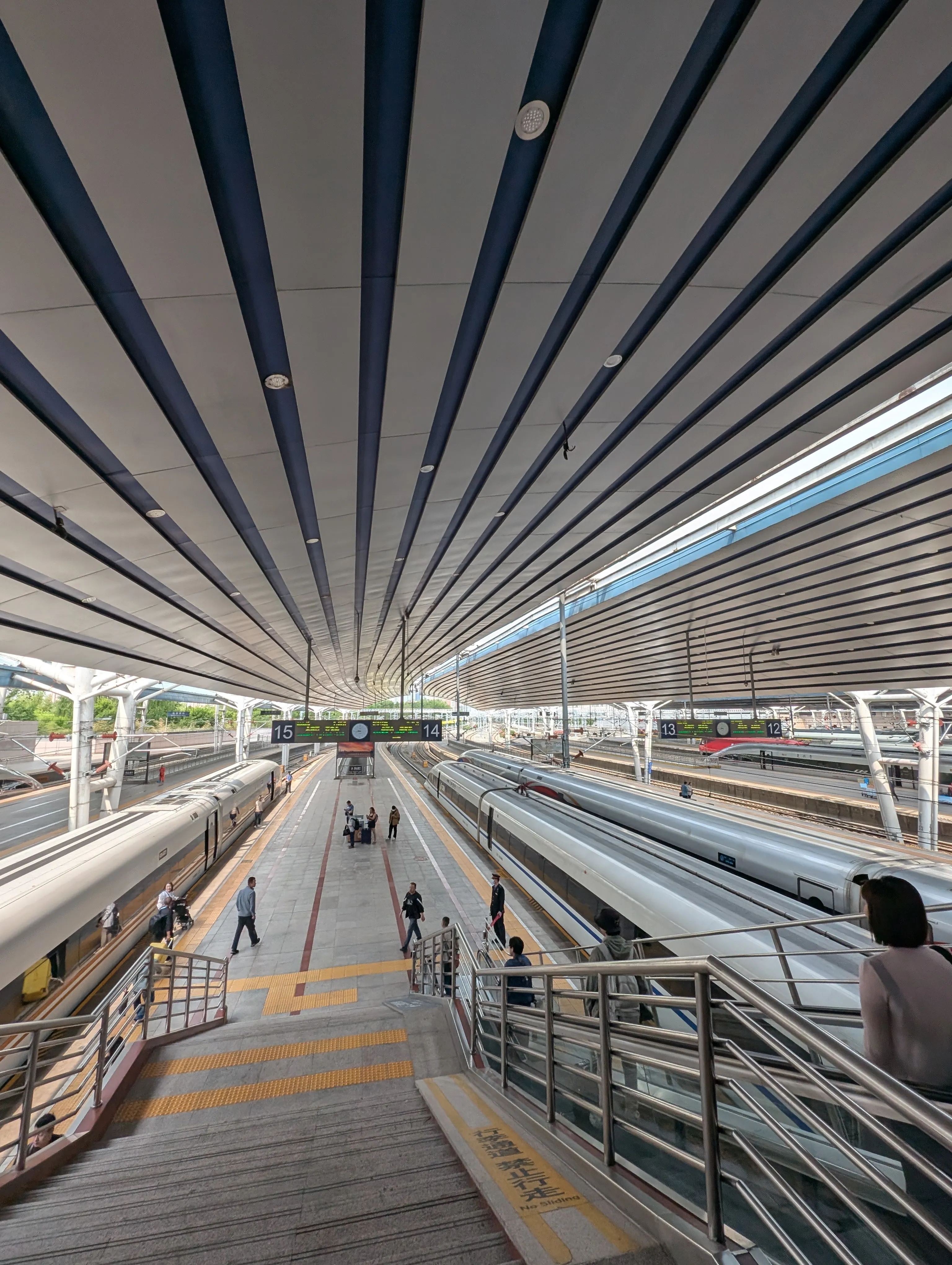
If I could transport pro-car, alternative-transit-skeptical Americans to any country to open their eyes to the immense benefits of diverse transit options, I would send them to China, despite China not representing my platonic ideal of urban design and transit. It is precisely because China falls short of that ideal that it makes the perfect introduction for them. Sending motorists to cities like Amsterdam or Tokyo, places built around the assumption or plan for minimal car ownership, would probably cause transit-shock. Rather, China offers a gentler version of the same lesson, delivered inside a country still dominated by car-centric design. It’s like the yogurt you hide a pill in to get your dog to take its medicine.
In China, there are at least two or three options to get anywhere, whether you’re crossing a city or crossing the country. Between cities, you can take high-speed rail, a plane, a bus, or a car. Within a city, you can drive, ride a bus, take the metro, walk, hire a ride-share, ride a scooter, or ride a bike (personal or a city bike rental). The details of any given itinerary matter, but Makeda and I found that most trips offered at least two viable choices, with one usually being a ride-share. In Beijing, for example, we used the metro, rode city bikes, walked, and took ride shares.
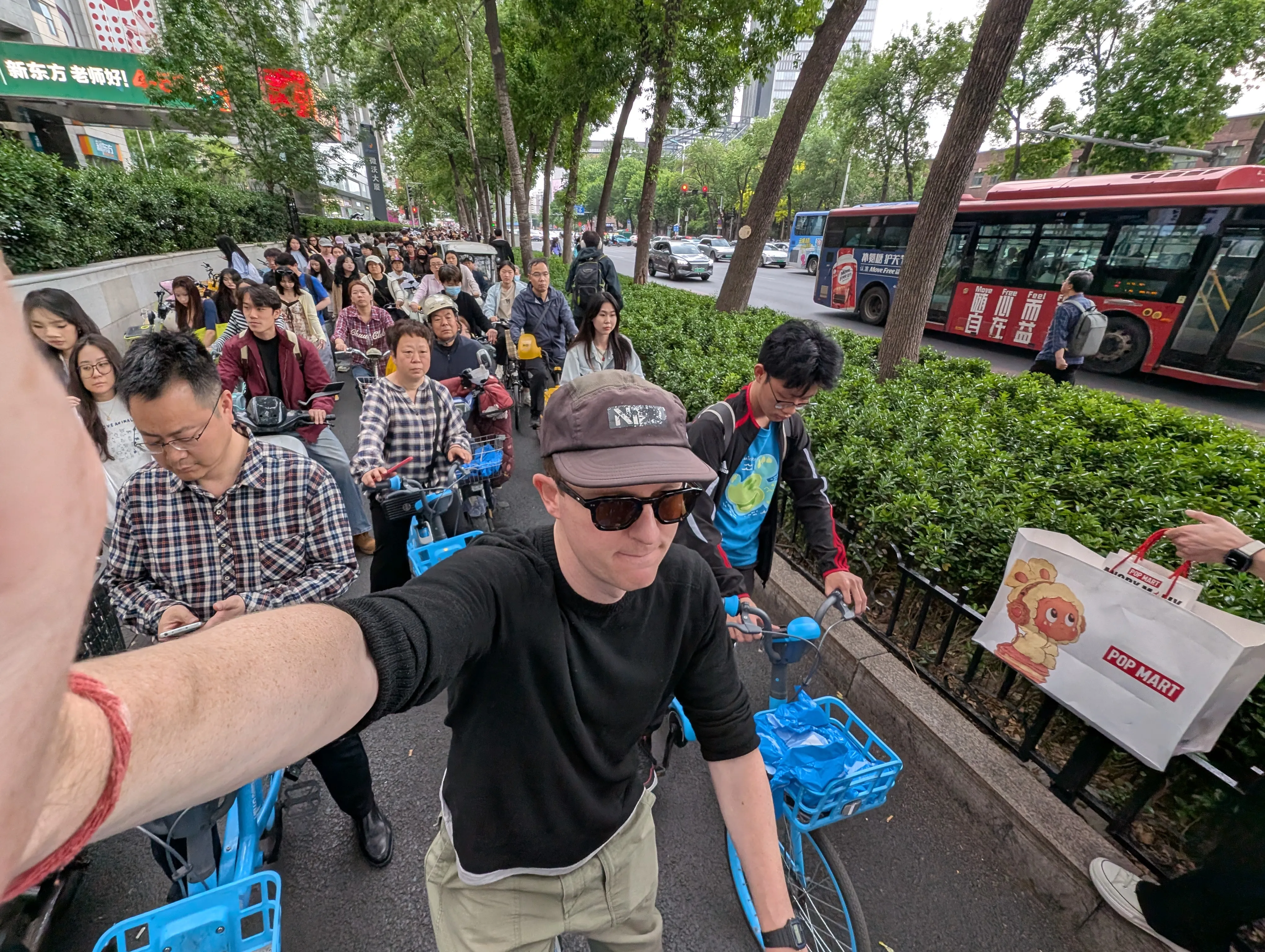 Buses, cars, and lots of bikes.
We took a bus to and from The Great Wall. This is one of the most obvious benefits of transit diversity: we always had the power of choice. We never felt that we needed a car. In fact, there was not a single place we went, or even considered going, that was only reachable by car. And yet, we still could reach these places by car, if we wanted. The transit options include of personal vehicles; they do not replace them.
The same is true when traveling around the country. We happily and comfortably rode high-speed rail for roughly 4,000 miles during our two months in the country, but we could have completed any connection with a flight, bus, or by driving. With less time, we certainly would have flown the three hours from Shangri-La to Guangzhou, instead of backtracking by train to Kunming, staying one night, then taking an eight-hour train to Guangzhou. But having the option allowed us to travel in our preferred style, and presumably eased congestion at the airport, and left two seats on the plane for those who needed them. This is another obvious benefit to car alternatives: when fewer people drive, there is less traffic, car noise, and pollution.
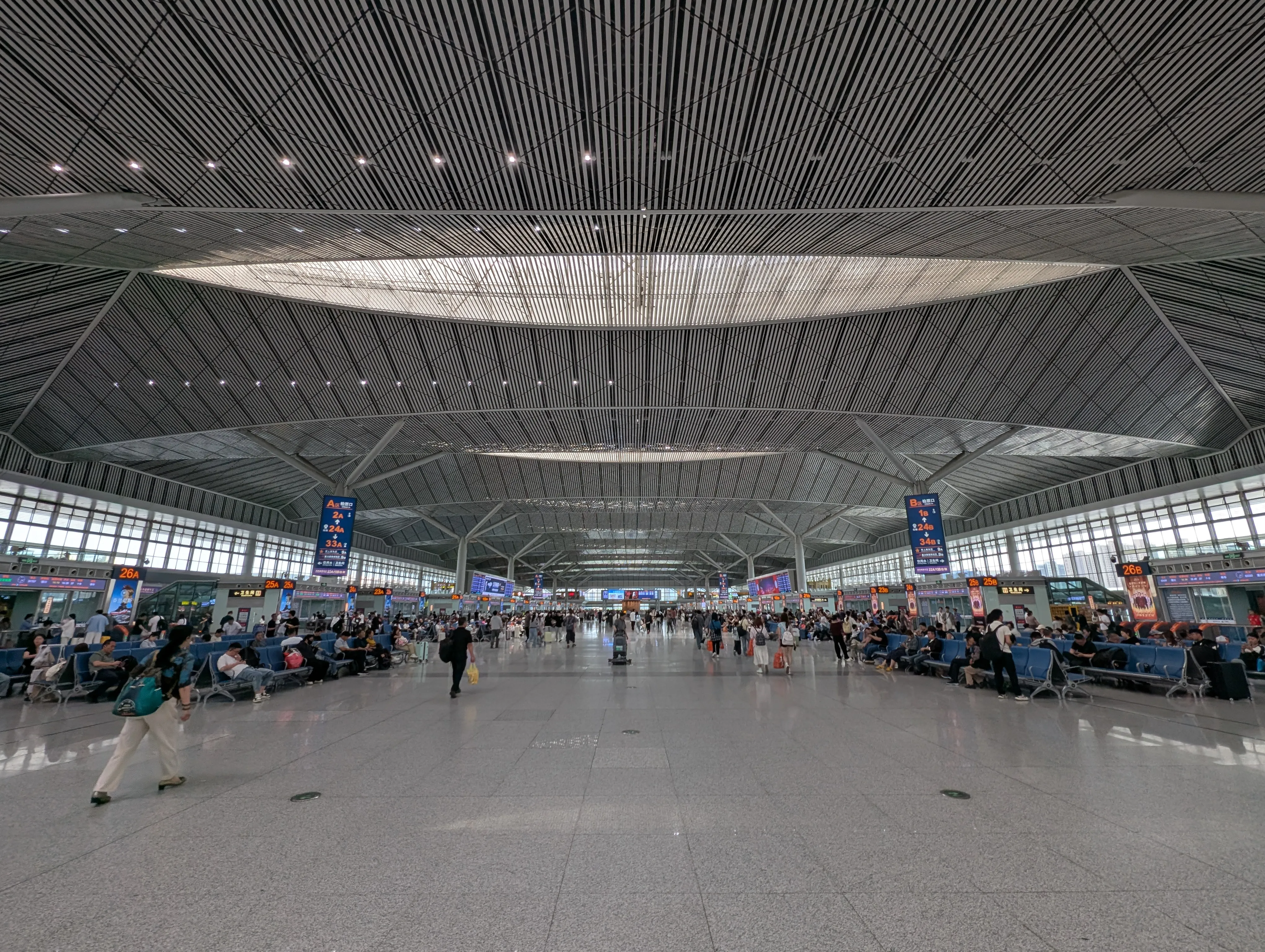 Airport? No, just a typical Chinese train station.
Despite its numerous positives, China’s infrastructure fails to reach perfection, and that gap is precisely why American drivers would not panic: it is still too car-centric. Beijing still features massive six to eight lane intra-city highways, sprawling intersections, and rising personal vehicle ownership. There are still major traffic issues.
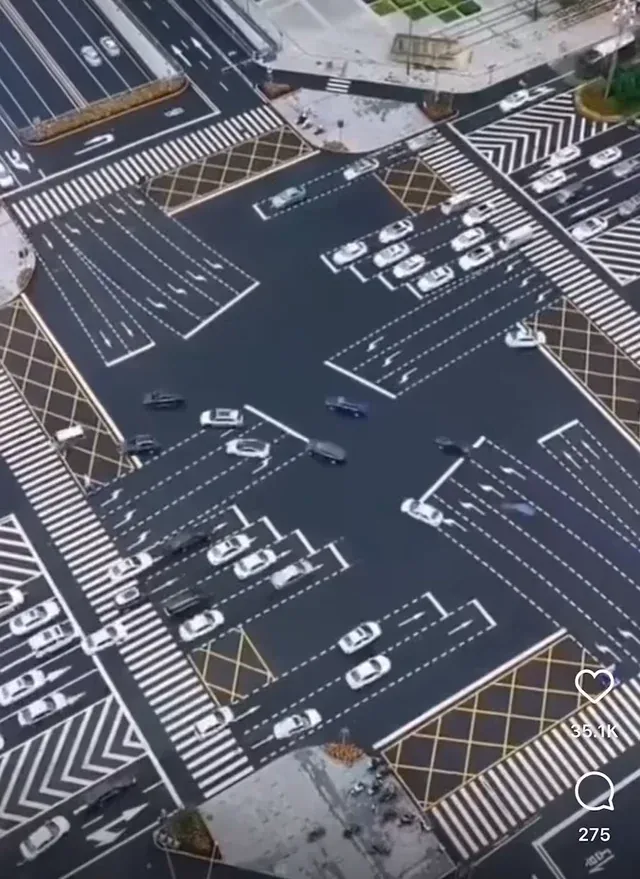 An example of a massive Chinese intersection.
One small consolation is that almost every car, taxi, and bus is electric, so despite the high car presence, cities are extremely quiet. There is still pollution, but at least it is not from automobiles. Cities, especially Beijing, are still designed around the vehicle to the detriment of the pedestrian and cyclist. And China can’t claim the American excuse that the infrastructure was laid down a century ago: it is constantly building new car-centric cities.
My hope is that Americans would see first-hand that options benefit everyone, including motorists; that widespread electric vehicle adoption is beneficial for public spaces and the environment; and that high-speed rail is often vastly superior to taking a flight. A guy can dream, right?