7 Things: Japan!
This blog is heavily inspired by a travel blog written by friends of my sister and brother-in-law, who chronicled their 2019 trip through Asia and Europe. In it they wrote many listicle-style posts in which they documented interesting, silly, novel, and notable things they encountered from place to place. It seemed like a great way to highlight aspects of travel that might otherwise fall by the wayside, and so I plan to do the same here in this blog. These are in no particular order.
1. The latest winter fashion trend for women is…skirts?
The weather while we were in Japan was, on average, 30 degrees F and snowing. So in accordance to, and with all respect for, what must be considered cold ass weather, Makeda, Tara, and I bundled up in more or less every garment we brought on the trip. So you can understand our shock when walking around Sapporo on our first full day we encountered dozens of women wearing miniskirts as if it were the middle of summer. As it turns out, wearing skin colored thermal tights and skirts is very trendy in Japan. I can’t say I fully understand it, but it was literally a head turner at the very least.
2. Airport ground crews wave to the airplane as it leaves the gate.
Not much more to say about this other than: seeing this for the first time delighted me to no end. It is so Japanese and possibly the cutest thing of all time.
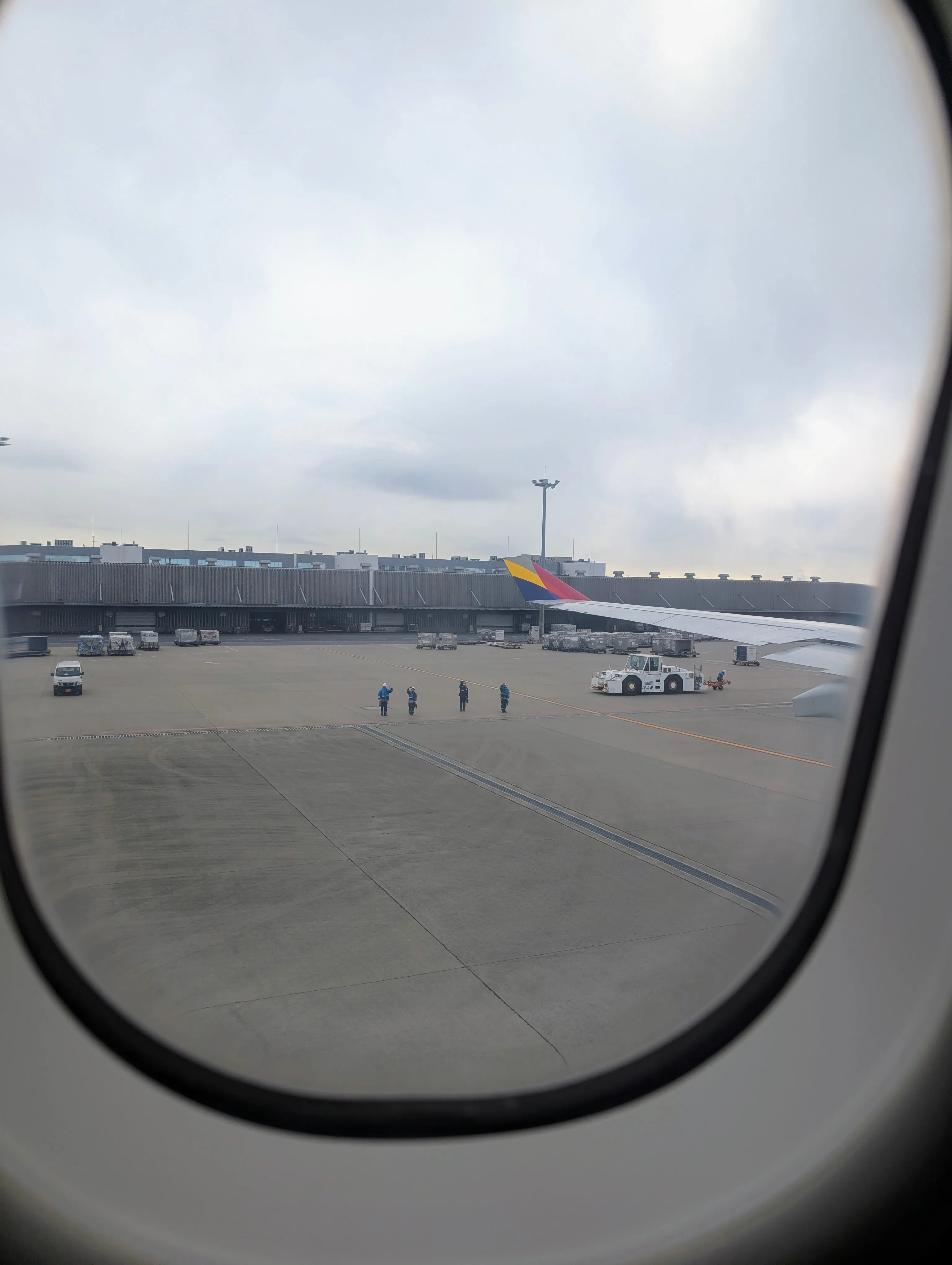 The ground crew waving to the airplane.
3. The yen is cheap (for now)!
Starting in the mid 90s, the conversion rate between yen and the dollar has typically hovered around 100 to 1, but since the pandemic the conversion has increased to roughly 150 to 1. Although Japan is experiencing inflation essentially for the first time since the 80s, the consumer price index in 2024 only rose 2.7 percent, so Americans are basically still getting a 50% discount on most things in Japan. This, combined with generally high inflation in the US and the specific lived experience of NYC prices, meant that everything in Japan felt very cheap. We even typically converted prices using the old 100 to 1 rate (easier to just mentally move a decimal two places!) and found the prices more than reasonable. The added knowledge that the actual cost was significantly less just felt like a bonus.
4. Nobody uses tire chains!
The only vehicles I saw in Hokkaido with chains on the tires were tractors. The ubiquitous kei cars had neither chains nor winter tires, despite the roads being covered in snow and ice. And for the most part - it surprisingly didn’t seem to be an issue! However, after checking out Ningle Terrace in Furano, Makeda, Tara, and I took a cab ride back to our hotel. Of course, it was snowing. After a somewhat harrowing drive home involving passing other cars on snowy two lane roads, our driver just missed the turn into our hotel parking lot. The road was at an incline, and after reversing down the road and attempting to turn into the lot from a stop, the car naturally started sliding all over the road. Thankfully, this was a very low traffic side street and we were hardly moving at all, so when we squirreled into a snow bank it was more humorous than dangerous. Eventually, I stepped out and helped push the car out of the rut and into the parking lot. After extended apologies from our driver and us declining her offers of money, she drove away, leaving us relieved to be home safe, bewildered, and laughing to ourselves.
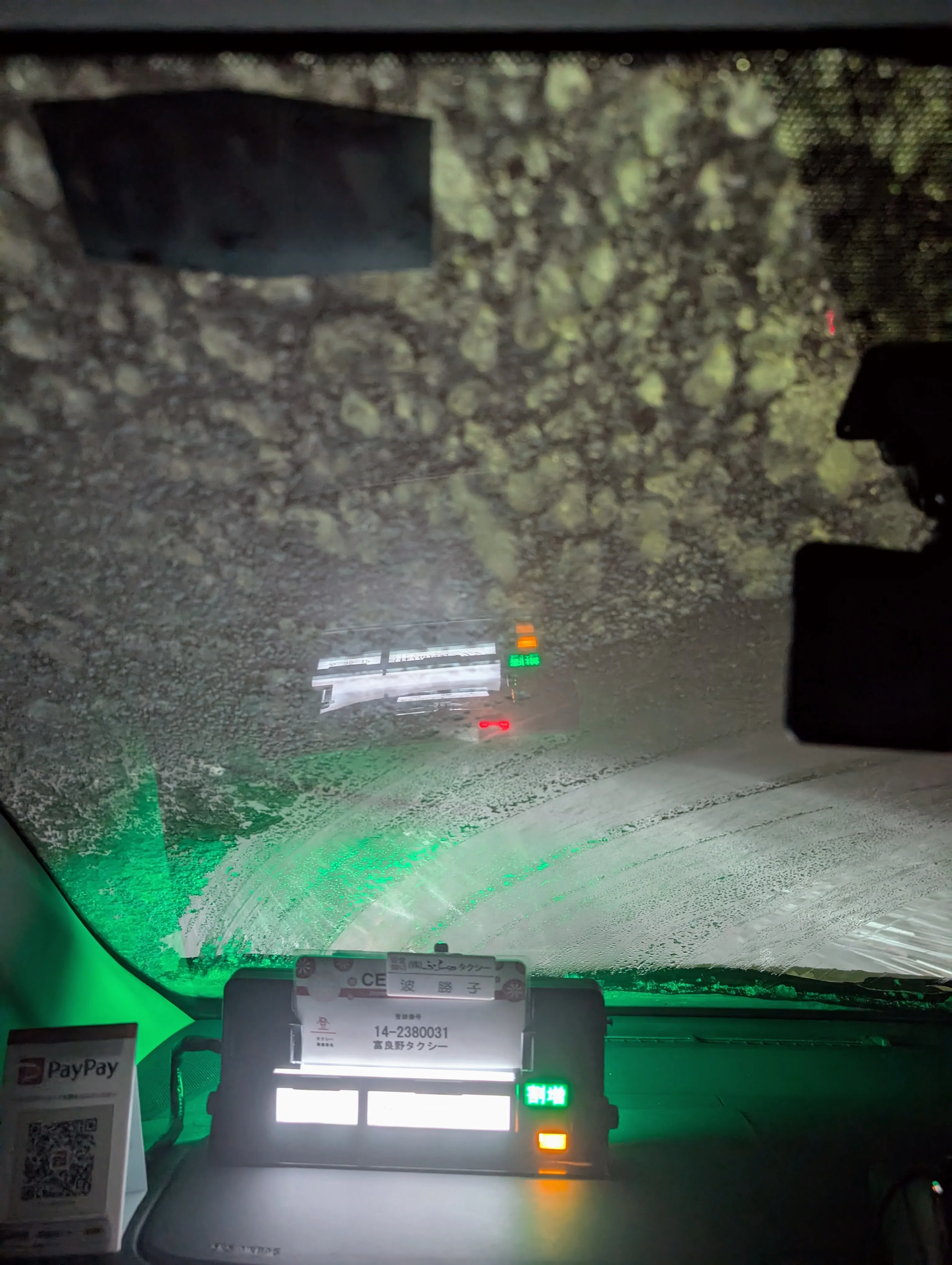 The windshield of our taxi.
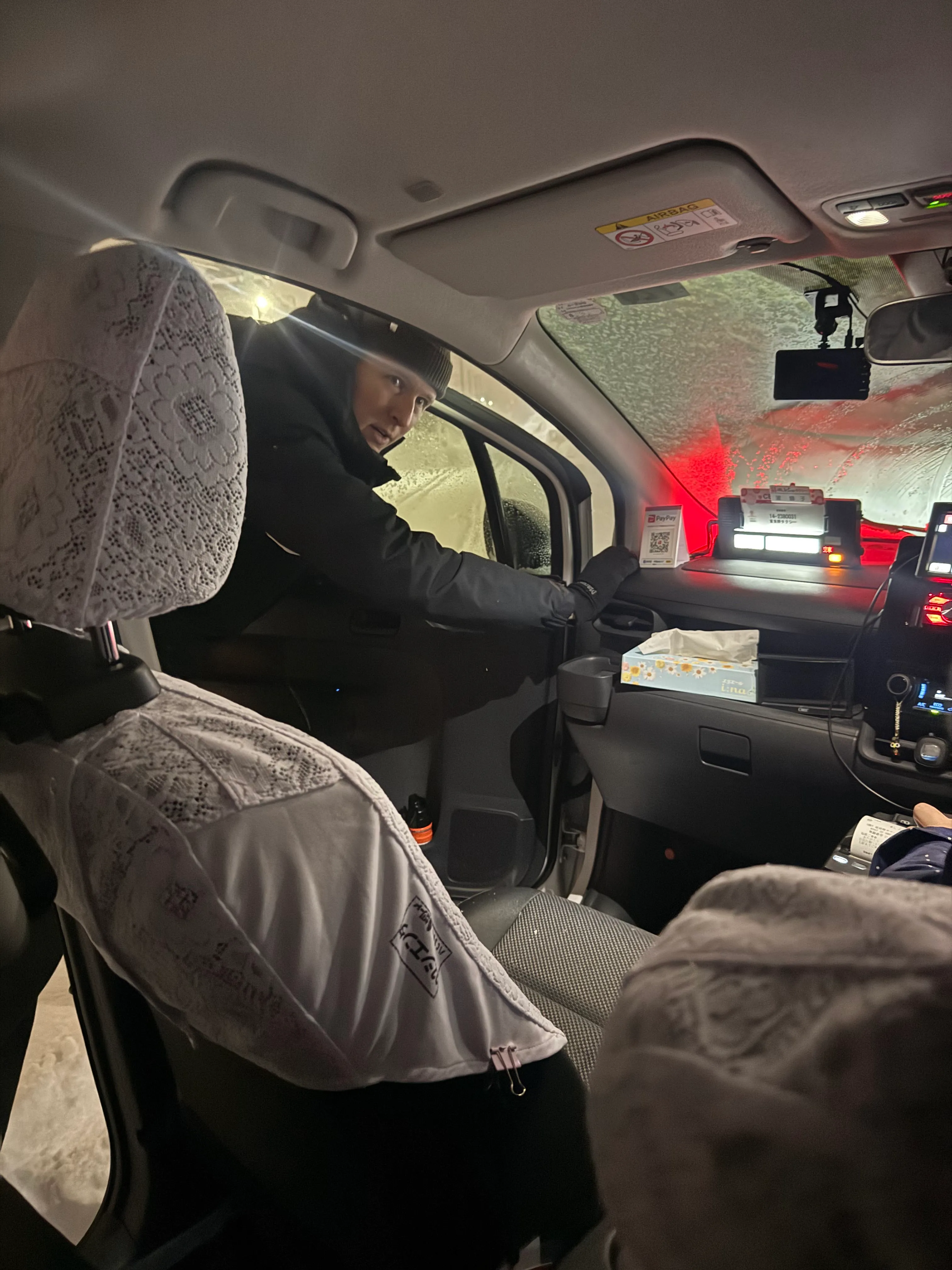 Me pushing the taxi.
5. Akasaka is a great Tokyo neighborhood for visitors.
While neighborhoods like Shinjuku, Shibuya, Ueno, and Harajuku are more commonly recommended for visitors in Tokyo, Akasaka is a wonderful alternative with some distinct advantages. It is centrally located with convenient access to several subway lines, with almost all major destinations in the city a one or two train journey away. It’s also possible, albeit slightly far, to walk to Harajuku/Shibuya to the west or Ginza to the southeast. It is quiet, full of delicious restaurants and bars, and was relatively affordable. There’s also, somewhat strangely, a mini Harry Potter themed shopping mall on the main strip. Do with that what you will.
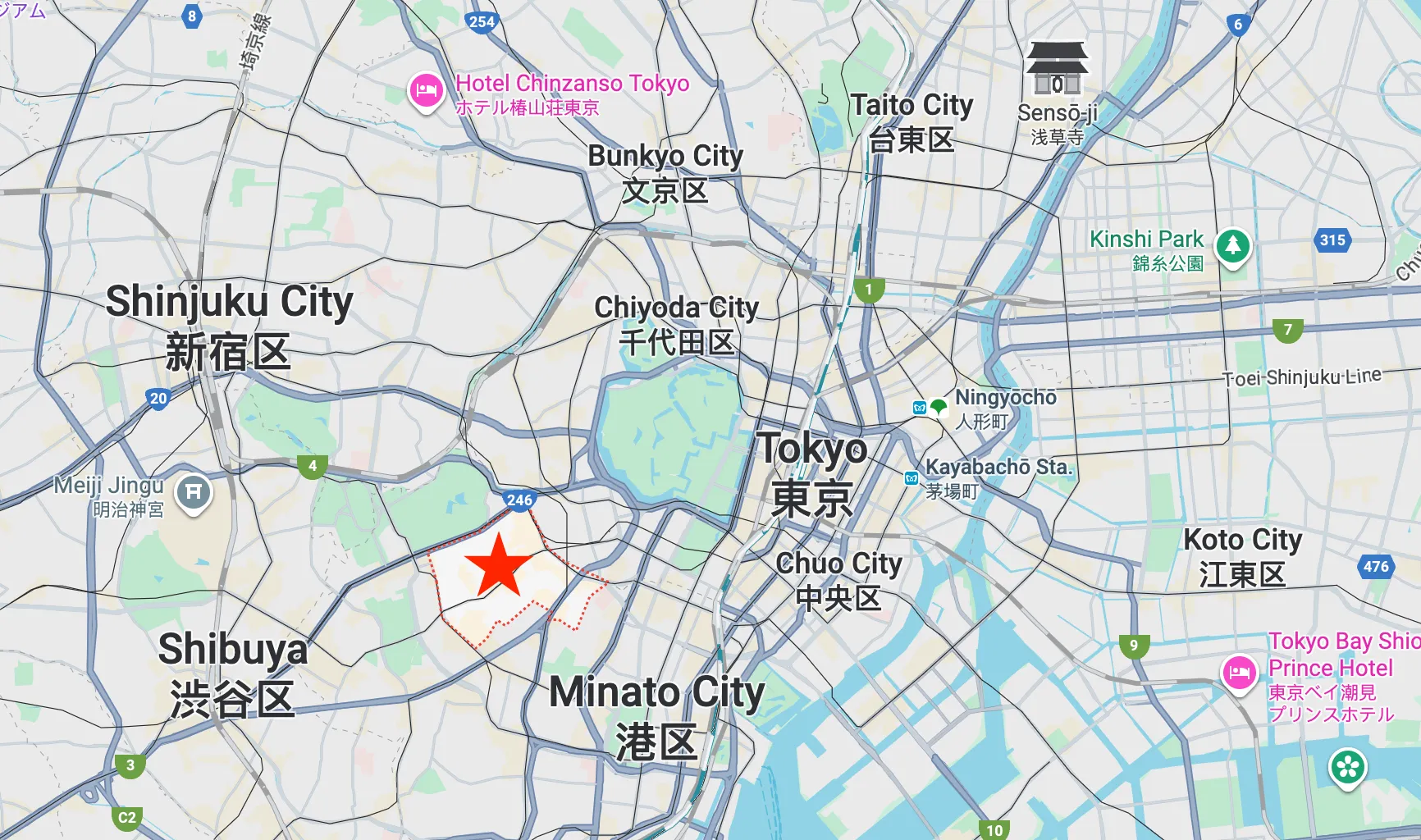 Akasaka seen at the red star.
6. Amekaji
Amekaji is a Japanese fashion style that means “American casual.” It is closely related to Ametora, meaning “American traditional.” These styles emerged in Japan after World War II and is essentially Japanese reinterpretation (or in some cases, pure reproduction) of classic Americana clothing. Think raw denim, leather engineer boots, military surplus, and elements of traditional prep. The inception and evolution of this style is fascinating and complicated, so I will refer you to W. David Marx’s book “AMETORA: How Japan Saved American Style” if you want a deeper dive. For a briefer overview, here’s a nice article covering the topic. I personally find the Japanese obsession with Americana and especially Army surplus clothing incredibly interesting in the wake of World War II. In Tokyo, there is arguably no better store to understand Amekaji than The Real McCoy’s. Here you will find meticulously recreated Army surplus clothing from the 20th century, as well as heritage American workwear. The prices will make your eyes water, but just wandering around the store is more than worth a visit.
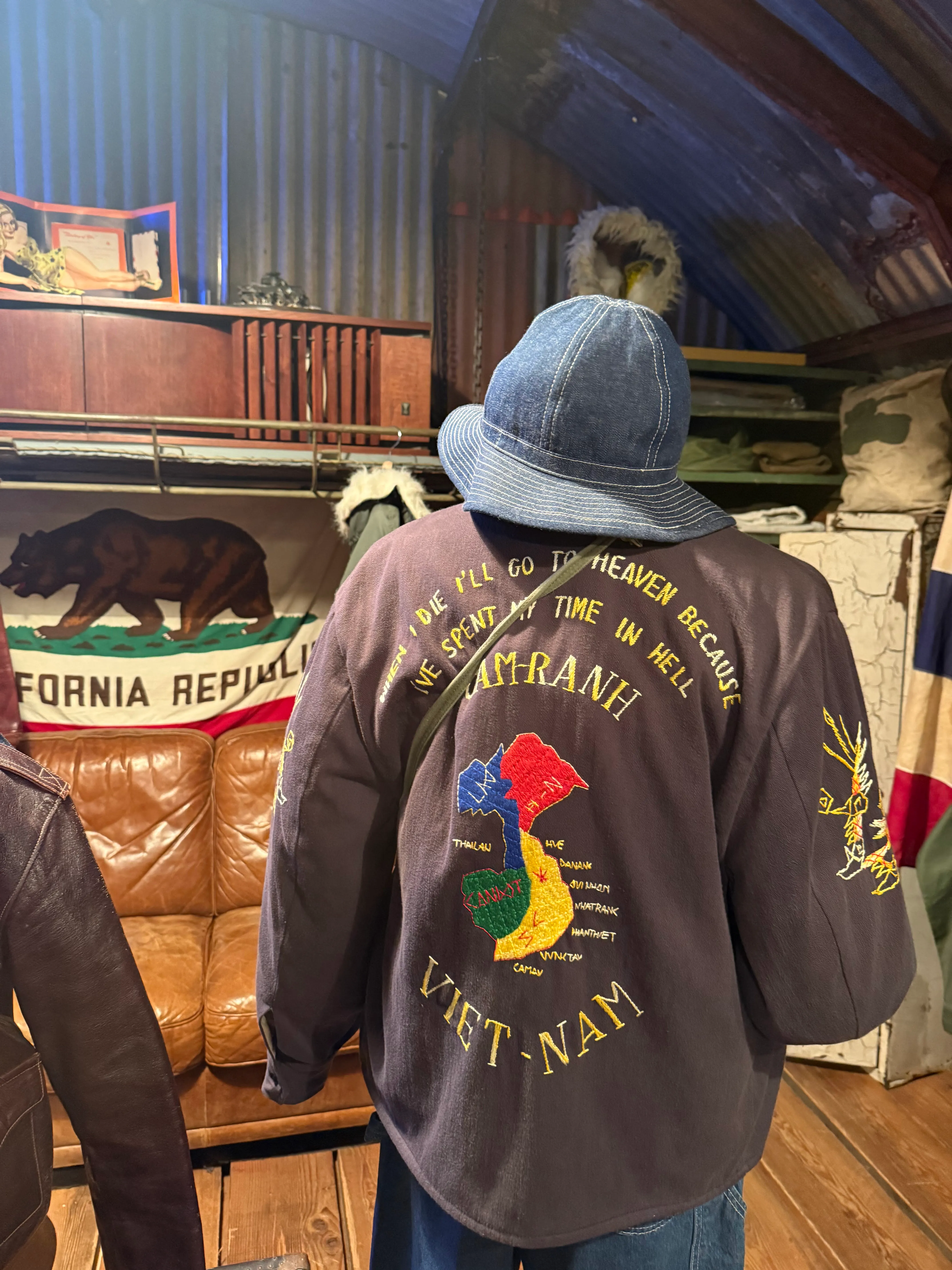 Jacket seen at The Real McCoy’s in Tokyo.
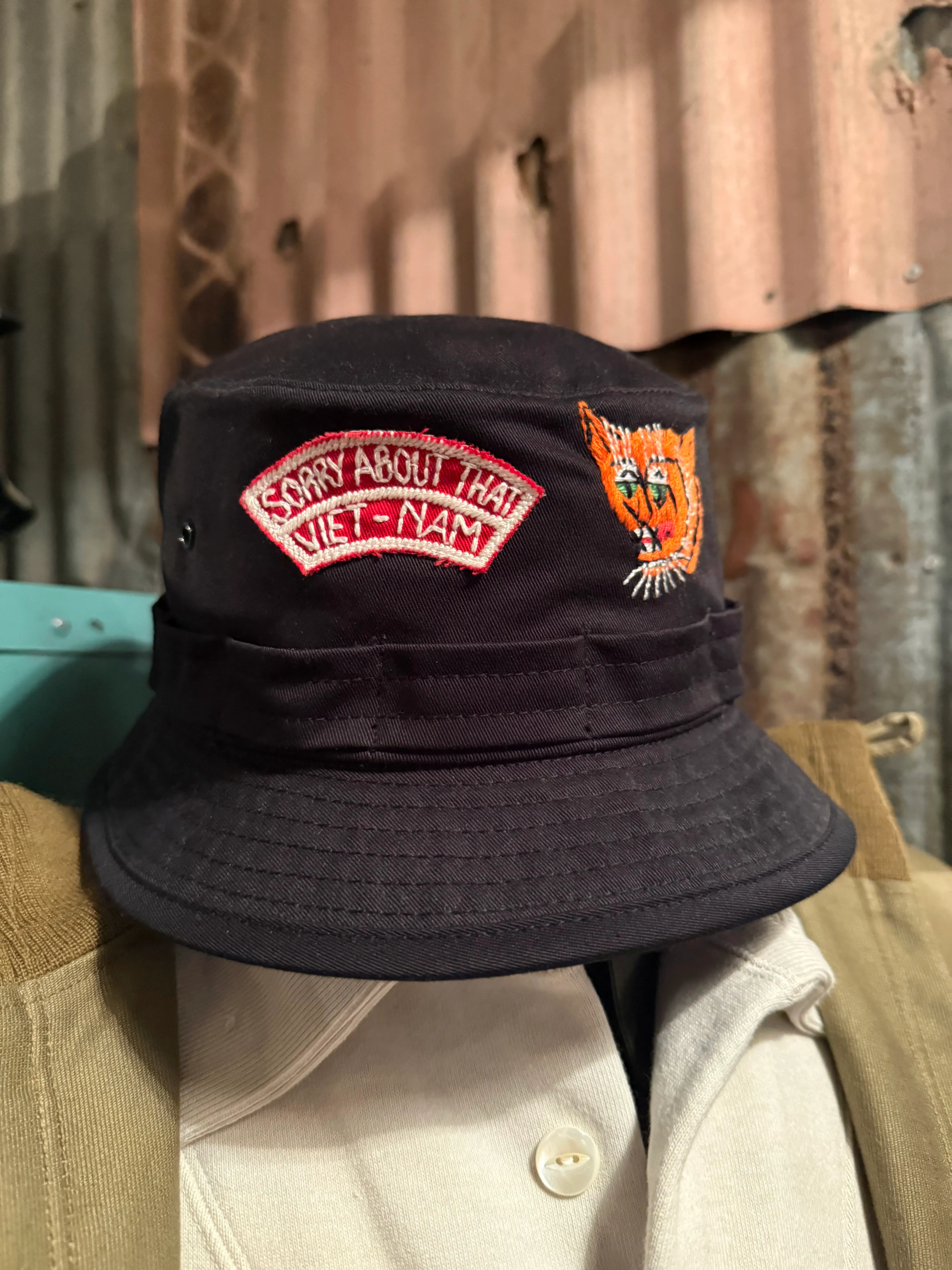 Hat seen at The Real McCoy’s in Tokyo.
7. Ema at Meiji-jingu
Ema are small wooden tablets on which Shinto worshippers, tourists, and people in general can write prayers, thoughts, ideas, or hopes. At Meiji Shrine in Yoyogi Park in Tokyo, ema are displayed on a fence encircling a beautiful camphor tree and all are welcome to peruse the votives.
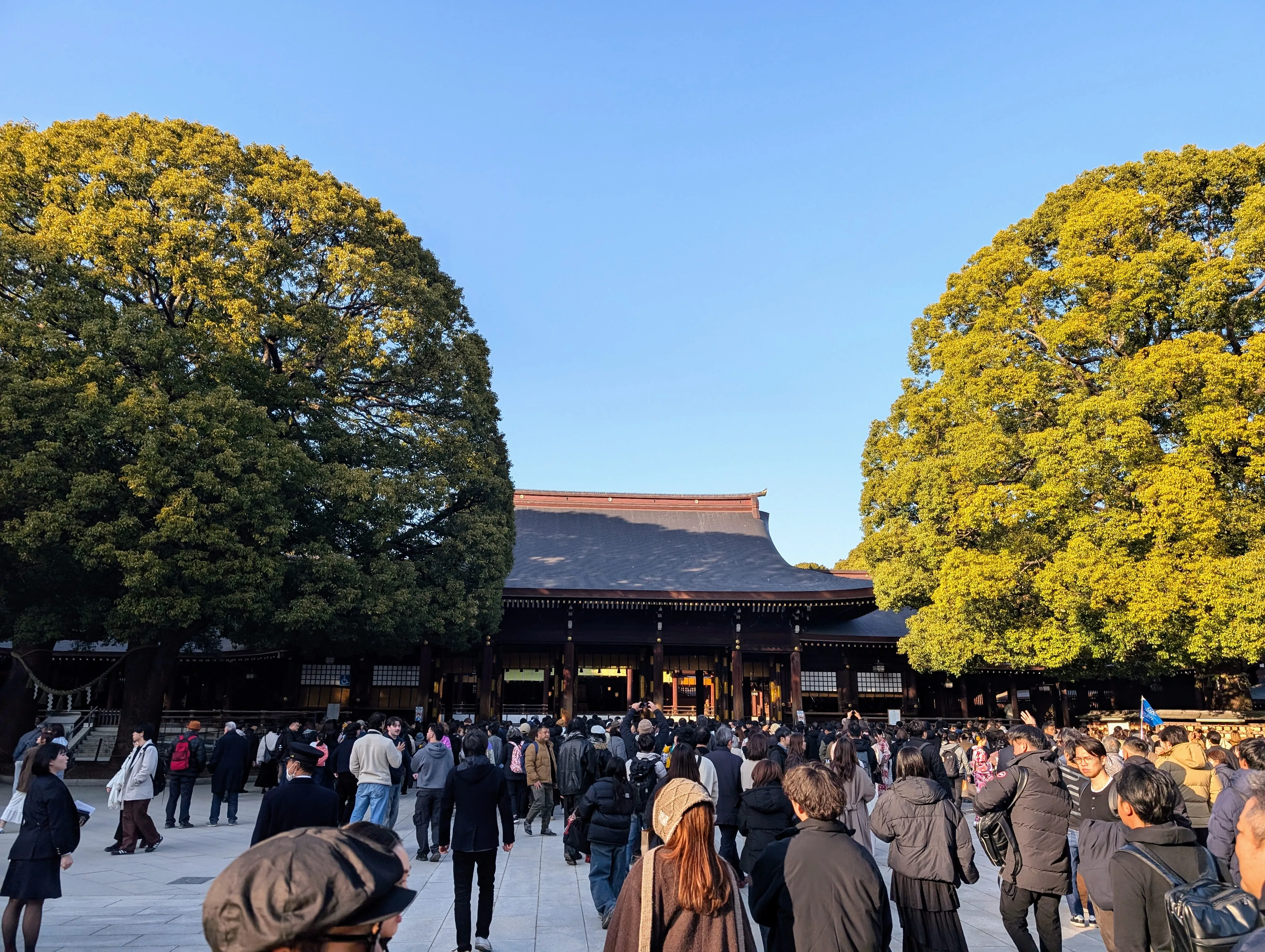 The Meiji Shrine with the camphor tree on the right.
On a beautiful and clear mid-winter day, surrounded by the stunning shrine, under the welcoming boughs of the camphor tree, I was nearly overcome by the common tenderness shared by the ema. Folks from every corner of the globe had found their way to this shrine to take a brief moment to express such similar hopes and feelings: health and happiness for their friends and family, freedom to live their authentic life, success their career, memories of those who have died, and hope for those yet to arrive. The common humanity was so clear and so comforting to me in this particular moment in time.
While reading the various ema, a single votive happened to catch my eye. It was one of the most poetic, sad, and loving pieces of writing I have read in some time.
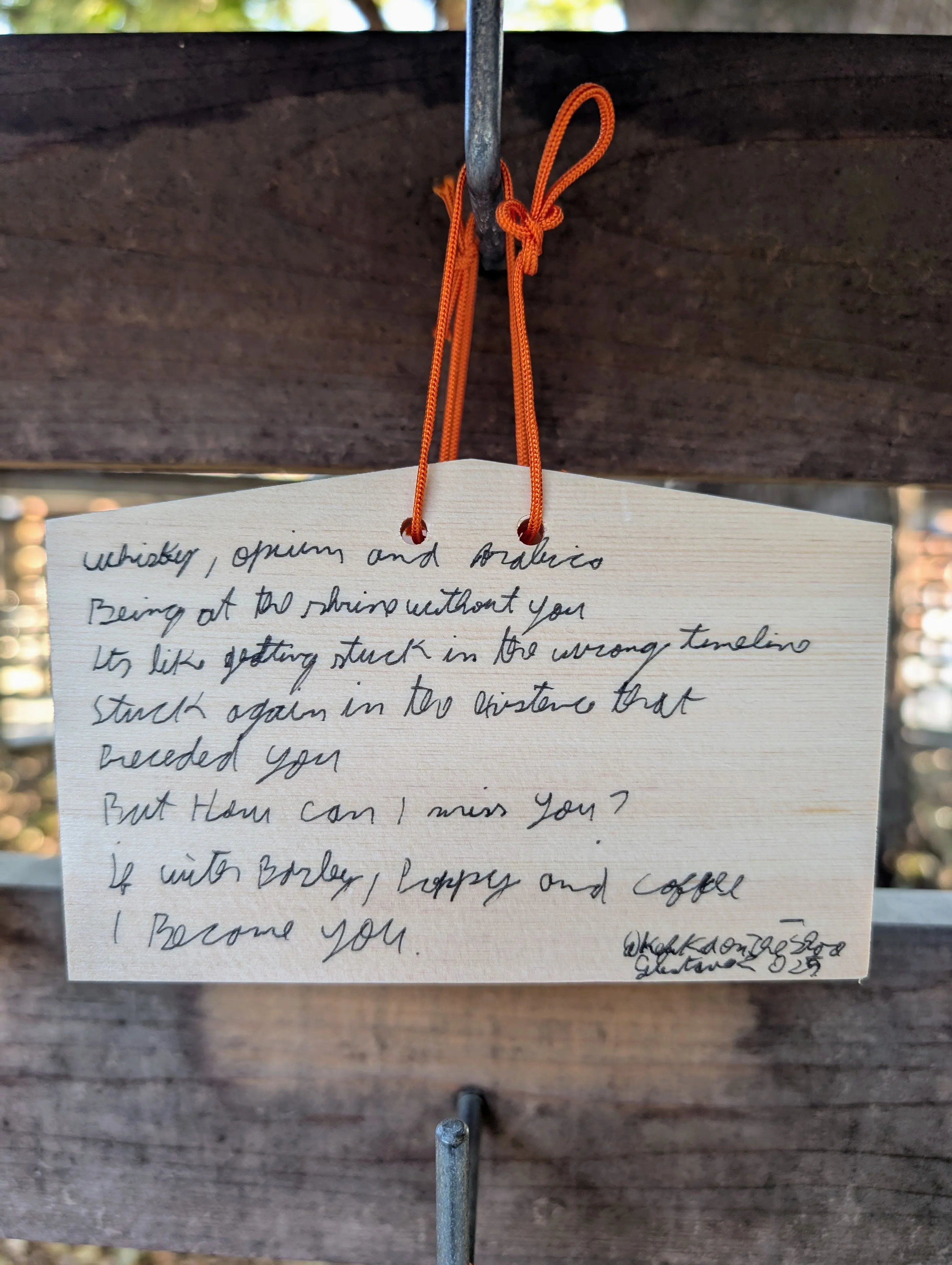 A poem at Meiji Shrine.
Whisky, opium, and arabica
Being at the shrine without you
It’s like getting stuck in the wrong timeline
Stuck again in the existence that
preceded you
But how can I miss you?
If with barley, poppy and coffee
I become you.